
Project Overview
Project Name: Village Sarthi Marketplace
Location: Moradabad, Uttar Pradesh, India
Launched On: —
Initiated & Sponsored By: Village Sarthi
Technology Partner: Vanijya Technology
Domain: Social Impact
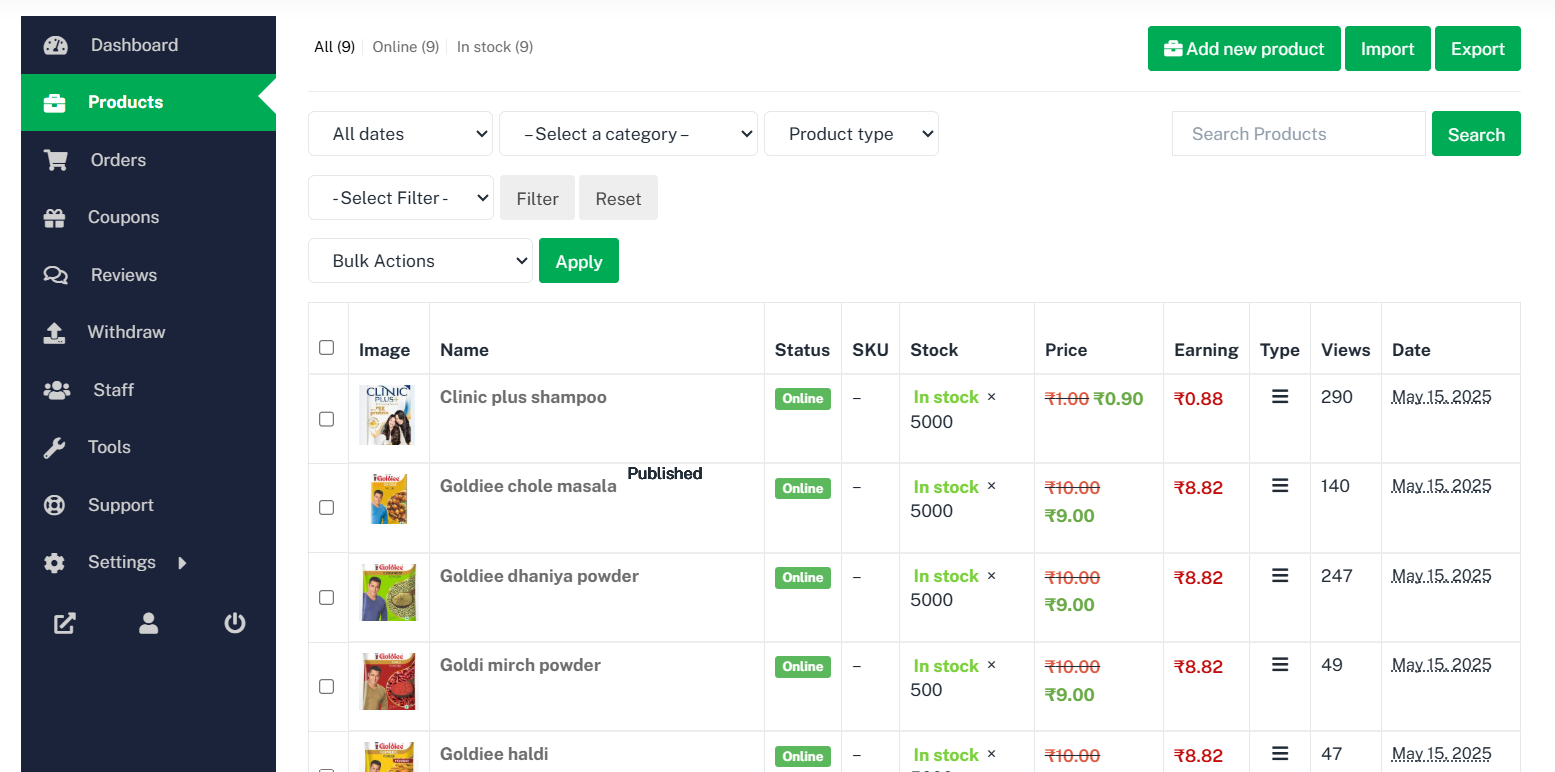
Screenshots


Building a scalable digital commerce platform for distributed vendors comes with multiple operational challenges:
- Managing multiple vendors within a single system
- Lack of structured onboarding & verification (KYC)
- Difficulty in handling region-based operations
- Payment processing complexities in multi-vendor environments
- Limited visibility for admins across vendors, products, and orders
The objective of this project was to transform a standard e-commerce setup into a structured, scalable multi-vendor marketplace, capable of handling real-world operations efficiently.
Solution Implemented
We customized WooCommerce into a fully functional multi-vendor marketplace, enhanced with vendor verification, geolocation intelligence, and seamless payment processing.
Key Components
Multi-Vendor Marketplace System
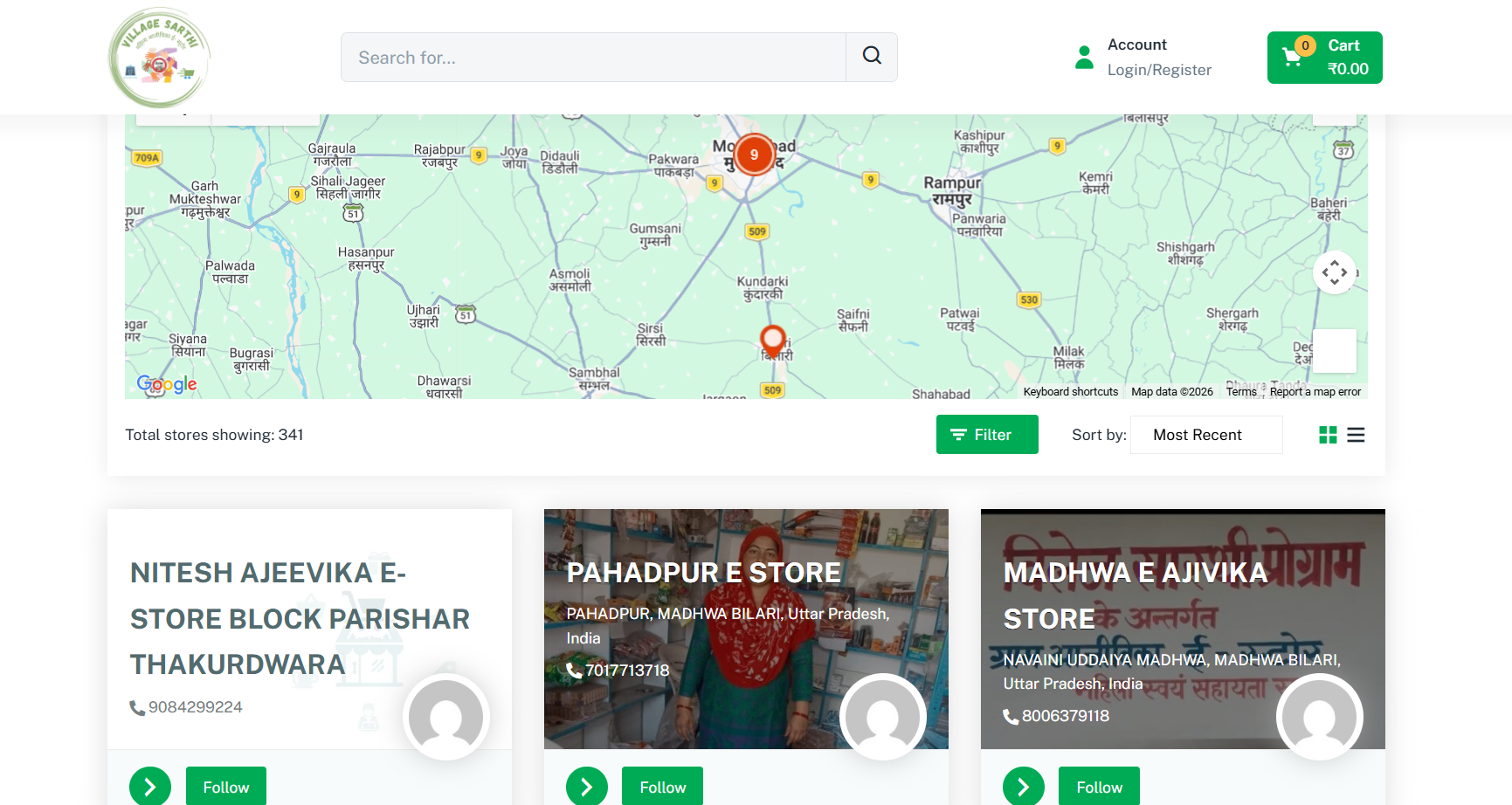
- Independent vendor dashboards
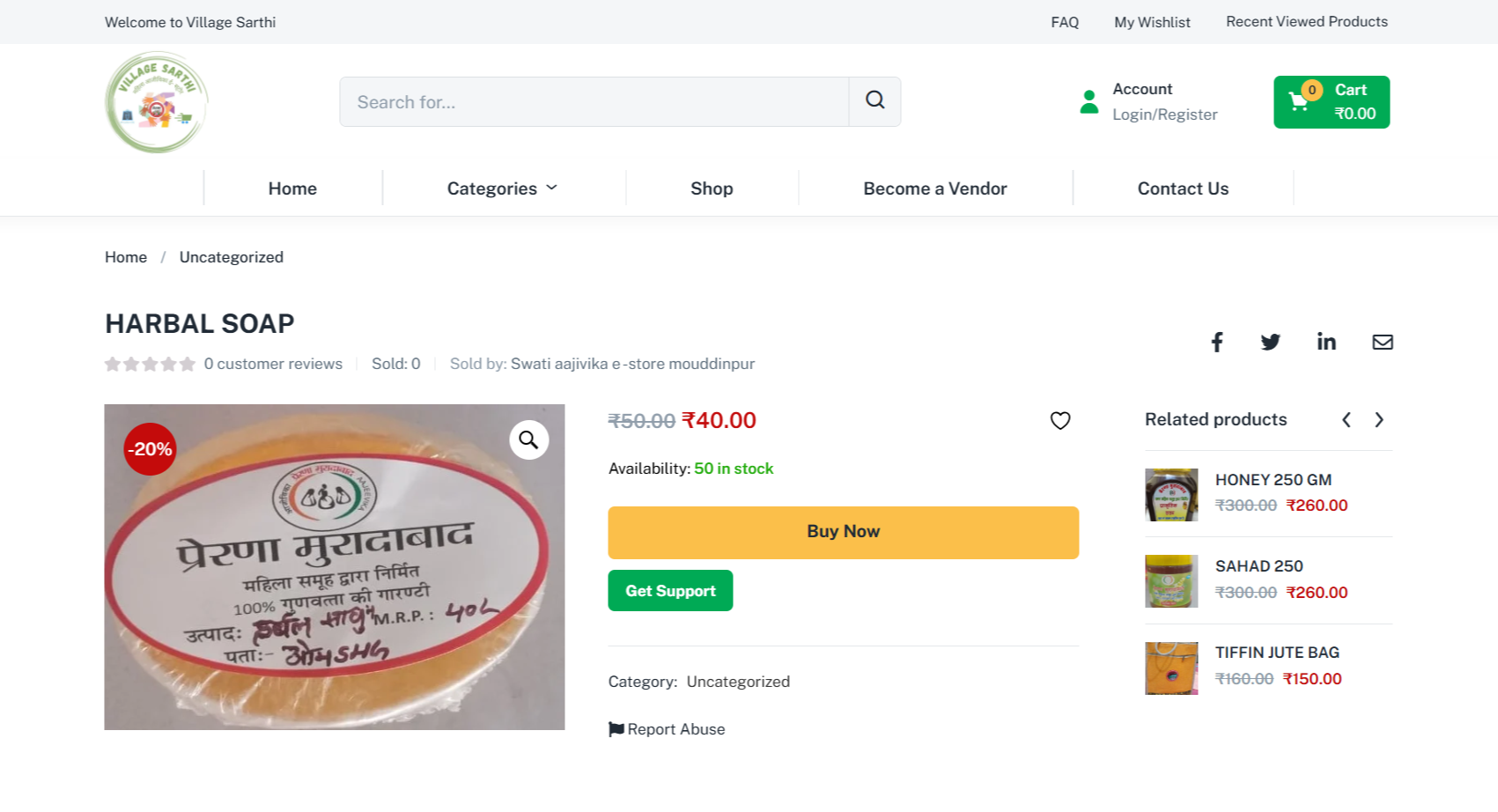
- Product & inventory management per vendor
- Admin-controlled approvals and moderation
Payment Integration
- Integrated Razorpay
- Secure and optimized checkout experience
- Reliable transaction handling across vendors
KYC Management System
- Vendor onboarding with document upload
- Admin-side verification workflow
- Structured approval system for trusted sellers
Geolocation-Based Features
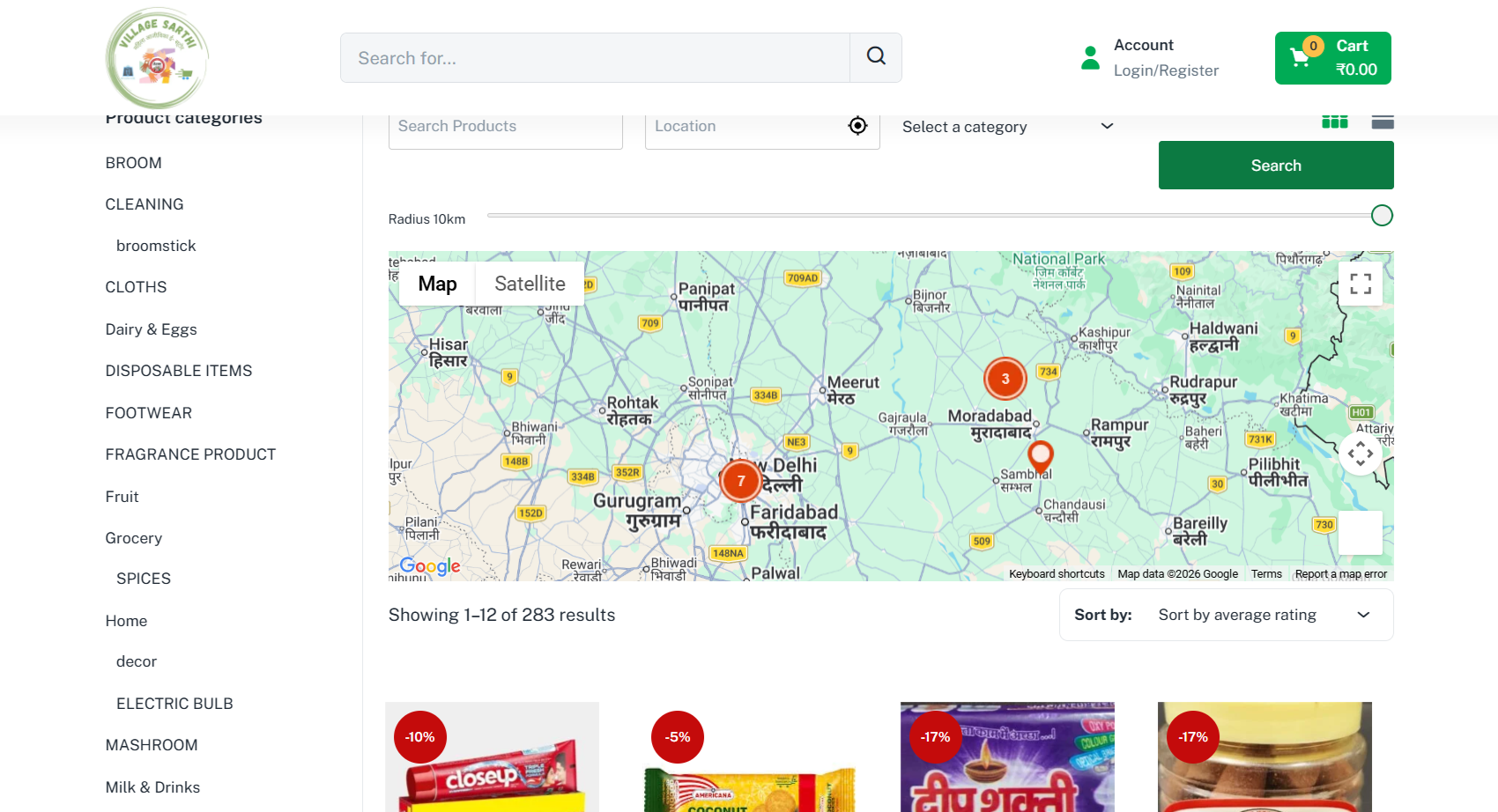
- Location-aware vendor/product mapping
- Region-specific operational control
- Improved product discovery and logistics alignment
Order & Workflow Management
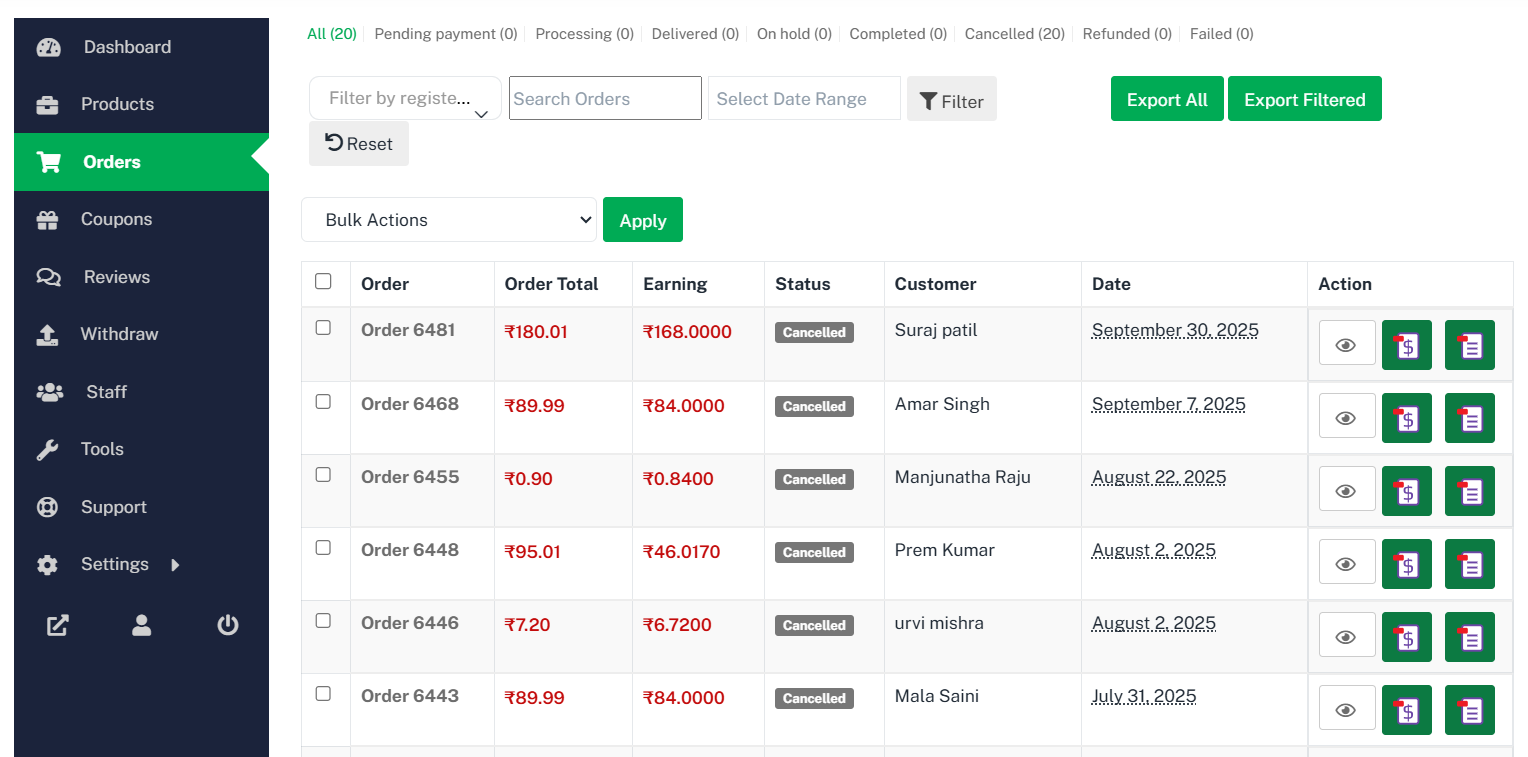
- Complete order lifecycle tracking
- Vendor-level and admin-level visibility
- Streamlined operational flow
Role & Contribution
As the technology partner, the focus was on adapting and extending WooCommerce for real-world marketplace operations:
- Customizing WooCommerce into a multi-vendor system
- Implementing KYC-based vendor onboarding workflows
- Integrating Razorpay for secure payments
- Developing geolocation-based platform logic
- Designing admin controls for centralized management
Launch & Deployment
The platform was successfully deployed as a pilot in Moradabad, validating its functionality in a real operational environment.
Measurable Impact
- Enabled structured onboarding and verification of vendors
- Streamlined multi-vendor operations within a single platform
- Reduced manual intervention through automated workflows
- Established a scalable system ready for expansion
User Experience Highlights
- Vendors can independently manage products and orders
- Admins get centralized control with full visibility
- Customers experience a smooth and secure checkout flow
- Platform remains lightweight and easy to navigate
Technology Stack (High-Level)
- WooCommerce-based marketplace architecture
- Razorpay payment gateway integration
- Custom KYC & vendor management system
- Geolocation-based logic implementation
- Optimized web-based admin dashboard
(Exact stack abstracted for portfolio confidentiality)
Why This Project Matters
This project demonstrates how existing platforms like WooCommerce can be transformed into scalable marketplace systems through the right customization and engineering approach.
It highlights:
- Practical implementation of multi-vendor commerce
- Integration of verification (KYC) into marketplace workflows
- Use of geolocation for operational efficiency
- Building scalable systems starting from pilot deployments
Key Takeaway
“A standard e-commerce platform, when engineered correctly, can evolve into a scalable multi-vendor ecosystem capable of handling real-world complexity”
